

Cynthia Malone, Black Ecologist and Grist Magazine Fixer, Accepted to Oxford DPhil to Decolonize Conservation Science
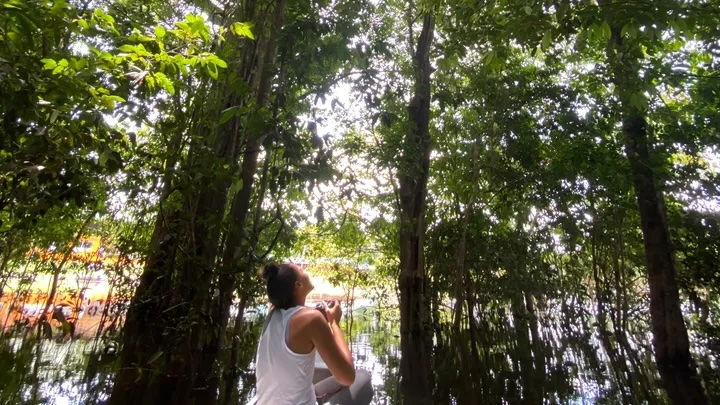
New York City conservation scientist brings 15 years of global field research to groundbreaking riverine ecosystem study at the University of Oxford
NEW YORK, NY, UNITED STATES, September 16, 2026 /EINPresswire.com/ -- Cynthia Malone, a New York City-born wildlife ecologist, conservation scientist, and Grist Magazine "Fixer," has been accepted to pursue a Doctor of Philosophy (DPhil) at the University of Oxford's School of Geography and the Environment. Her research project, "Decolonizing the Wild in the Land of Many Waters," will center Black and Indigenous sciences to explore riverine ecosystems in Guyana — a country whose capital city is projected to be underwater within the next decade due to accelerating climate change.The acceptance marks a landmark achievement for Malone, who is the first in her immediate family to graduate university. Less than three percent of Oxford's postgraduate students are Black — a figure that reflects not a lack of talent, but a persistent lack of institutional access that Malone's work directly confronts.
A Career Built on the Front Lines of Conservation
For over 15 years, Malone has researched wildlife and applied conservation science across three continents. Her field work has taken her from the peatswamp forests of Borneo, where she tracked orangutans, to Cameroon, where she managed human-wildlife conflict, to the Solomon Islands, where she supported biocultural stewardship alongside Indigenous communities.
Working alongside Black and Indigenous communities throughout her career, Malone observed a persistent paradox at the heart of conservation science: the very communities whose generational knowledge contributes immensely to understanding the natural world are consistently excluded from the academic institutions that shape environmental policy and research.
In recognition of her leadership in advancing equity in STEM and her work bridging conservation science with environmental justice, Malone was honored as one of Grist Magazine's 50 "Fixers" — an annual recognition of emerging leaders developing innovative solutions to the climate crisis. Her 2018 essay for Motherboard Tech VICE Magazine, "The Future of Science is Black," is widely credited with heralding a global turn toward more liberatory futures in science. She has shared her work internationally, from community forums to keynote lectures at Yale University and New York University.
Decolonizing the Wild in the Land of Many Waters
Malone's Oxford DPhil project centers Black and Indigenous sciences to explore how riverine ecosystems — stretching from Guyana's interior forests to its coastline — are co-produced by communities and howler monkeys, earth's loudest land animal. The research draws on ecology, historical archives, and epistemic repair to build a new understanding of Guyana's natural history and the sciences that will allow its communities to survive a rapidly changing planet.
Guyana holds some of the world's most critical tropical forest ecosystems, with biodiverse forests covering 80 percent of the country's surface. Once the second poorest country in the Western hemisphere, the discovery of mass oil reserves in 2015 initiated an unprecedented economic transformation — yet its capital, Georgetown, faces the prospect of being submerged within the next five to ten years due to rising sea levels.
Oxford holds resources essential to this research that exist nowhere else in the world, including colonial maps of Guyanese plantation estates at the Bodleian Library and wildlife specimens collected from Guyana's interior at the Natural History Museum.
"True conservation requires an entirely new approach to environmental science — one that centers local and Indigenous expertise," said Cynthia Malone. "When we lack diverse perspectives in climate science, we lose the very tools needed to fight global collapse. We cannot solve modern ecological emergencies using the rigid, exclusive structures of the past."
Community Support
Malone has launched a community fundraising campaign to support her first year at Oxford, covering international tuition, visa fees, healthcare surcharges, and relocation costs. Those wishing to support her research and journey to Oxford can learn more at https://www.gofundme.com/f/help-black-ecologist-advance-urgent-research-with-oxford-phd
About Cynthia Malone
Cynthia Malone is a New York City-based wildlife ecologist and conservation scientist with over 15 years of field experience across Borneo, Cameroon, the Solomon Islands, Guyana, and beyond. A Grist Magazine 50 Fixer and keynote speaker at Yale and NYU, her work integrates Black and Indigenous ecological knowledge into mainstream conservation science. She is an incoming DPhil candidate at the University of Oxford's School of Geography and the Environment.
Cynthia Malone
Media Relations
email us here
Visit us on social media:
Instagram
Legal Disclaimer:
EIN Presswire provides this news content "as is" without warranty of any kind. We do not accept any responsibility or liability for the accuracy, content, images, videos, licenses, completeness, legality, or reliability of the information contained in this article. If you have any complaints or copyright issues related to this article, kindly contact the author above.
